







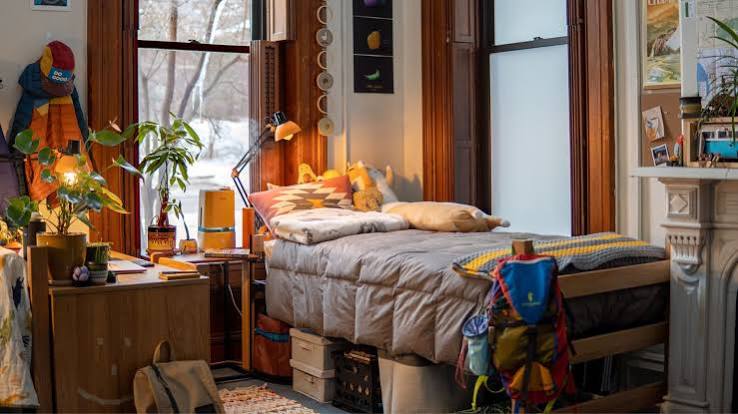
The best college dorms in Vermont for 2027 combine hall variety, strong amenities, and a clear path from first-year housing to apartments. This guide covers 10 Vermont schools, from small residential colleges like Middlebury and Bennington to the University of Vermont and the Vermont State University campuses.
This guide follows the University Magazine ranking list for Vermont and uses the published University Magazine rankings methodology for institution-level context. Each section summarizes housing details from the school’s own pages so you can compare halls, room types, and requirements before you apply. For more state guides, browse our best dorms rankings and the wider university rankings.
The Best College Dorms in Vermont 2027
1. Middlebury College
Middlebury is a residential college, so students live on campus until they graduate, with a limited number of seniors released to live off campus. First- and second-year students live in traditional halls, typically in doubles with shared community bathrooms, and first-years in the same seminar live together.
Juniors and seniors can choose double or single rooms in shared suites, small houses, and themed communities. Resident assistants support first- and second-years, and community assistants support juniors and seniors. See Middlebury residential life.
2. Bennington College
Bennington houses students in about 20 campus houses. The 1930s Colonials include Bingham, Booth, Canfield, and Dewey, the Barnes houses date to the 1970s, and the Woo houses to the 2000s. Rooms are singles, doubles, and triples, and every house has a communal kitchen with refrigerators.
Welling Townhouse (a co-op) and Longmeadow require a prior year on campus, and Shingle Cottage is for seniors. Each house runs a weekly Coffee Hour and sets its own quiet hours. Pets other than fish are prohibited. See Bennington residential life.
3. Vermont State University Lyndon
Lyndon offers Wheelock Hall, with suites of four doubles and gender-inclusive options, and the Rita Bole Complex, with 22 apartment-style suites of six single bedrooms and two bathrooms. Arnold and Bayley Halls are connected suite halls for 12 students each, and Arnold hosts first-year housing.
Rooms have a twin extra-long bed, desk, wardrobe or dresser, and wireless internet, and residential students must enroll in a food plan. Some buildings are offline for renovation and are not available to new students for 2026-27. See Lyndon residence life.
4. Champlain College
Champlain houses first-year students in eight Victorian-era mansions in Burlington, none more than two blocks from the campus center. Pearl Hall is the largest at 49 students, Summit Hall holds 48 and stays open during breaks, and McDonald Hall is geothermal-heated and fossil-fuel free. Aiken Hall has air conditioning and a full kitchen, and Schillhammer Hall has lake views and semiprivate bathrooms. Most halls have a common room. Upper-year housing is listed on a separate page. See Champlain first-year housing.
5. Norwich University
Norwich has about 2,100 residential beds and a four-year on-campus living requirement for most residential students, with waivers available. Eight Corps of Cadets barracks surround the Upper Parade, and Crawford Hall houses cadets and civilian students. Dalrymple and South Halls house civilian students in single and double rooms, with two live-in professional staff and a 10-member student team in each. Halls have fitness centers, laundry, lounges, and study rooms. See Norwich housing and dining.
6. Vermont State University Johnson
Johnson lists residence halls and on-campus apartments. Arthur Hall is suite-style, with four-double suites and a shared bathroom, and Governors Hall has single, double, and triple rooms, a kitchen, and laundry.
Campus Apartments are unfurnished one-, two-, and three-bedroom units, with rent covering heat, hot water, electricity, and trash. Residential students must enroll in a food plan, and some buildings are offline for renovation for 2026-27. See Johnson campus.
7. Vermont State University Randolph
Randolph has four residence halls with live-in resident assistants and residence directors. Morey Hall is co-ed with gender-inclusive options and the dining hall on the first floor, Keenan Hall has three wings and a gaming space, and Nutting Hall has two wings near academic buildings. Old Dorm offers single, double, and triple rooms and hosts summer housing. Each hall has a communal kitchen with an oven, microwave, and full-size refrigerator, and residents must enroll in a food plan. See Randolph residence life.
8. Saint Michael’s College
Saint Michael’s requires full-time undergraduates ages 17 to 25 to live on campus, though commuters can still use housing, and it guarantees housing for all four years. Options include traditional halls, suites, apartments, and townhouses, and Alumni Hall and Cronogue Hall are two of the most popular.
Traditional quad rooms most commonly have one roommate, while other areas offer singles or single rooms within a suite. Residence Life has more than 35 staff members. See Living at Saint Mike’s.
9. University of Vermont
UVM houses first- and second-year students in 41 halls, each part of an interest-based Learning Community. Halls are grouped by North, Athletic, Redstone, and Central campuses, including McAuley, Mercy, Living & Learning A to E, Harris/Millis, and Central Campus Residence Hall. Two in-hall fitness centers, in Central Campus Residence Hall and Christie-Wright-Patterson, offer free memberships to their residents. Each hall has a 3D walkthrough tour. See UVM hall information.
10. Vermont State University Castleton
Castleton lists 11 residence halls. Suite-style options include Adams, Castleton, Haskell, Morrill, and Wheeler, usually with four double rooms around a living room and bathroom, and Audet, North, and South Houses are pod-style with three doubles sharing a bathroom. Babcock, Ellis, and Hoff Halls are corridor-style. South House is designated Wellness Housing, a substance-free community. Hospitality majors live at Castleton Lodge at Killington. Some buildings are offline for 2026-27. See Castleton residence life.
Housing rates, hall closures, and requirements change each year, so check each school’s housing office before you apply. Use this list to narrow your options, then compare halls, room types, and costs on the official pages.
Frequently Asked Questions
What are the best college dorms in Vermont for 2027?
Middlebury College, Bennington College, and Vermont State University Lyndon lead this University Magazine list for 2027, followed by Champlain College, Norwich University, and Vermont State University Johnson. All 10 schools are ranked below with housing details from official sources.
Which Vermont colleges require students to live on campus?
Middlebury is a residential college where students live on campus until they graduate, Norwich has a four-year on-campus living requirement for most residential students, and Saint Michael’s requires full-time undergraduates ages 17 to 25 to live on campus.
Which Vermont school guarantees four years of housing?
Saint Michael’s College guarantees housing for all four years, according to its housing page.
Do Vermont State University residents need a meal plan?
Yes. Residential students at Lyndon, Johnson, Randolph, and Castleton must enroll in a food plan each semester.
Which Vermont schools offer suite-style housing?
Vermont State University Lyndon (Wheelock Hall, Rita Bole Complex), Johnson (Arthur Hall), and Castleton (Adams, Castleton, Haskell, Morrill, Wheeler), plus Middlebury and Saint Michael’s for upperclass students, offer suite-style options.
Top 10 Best College Dorms in Vermont 2027: Ranked List
- Middlebury College
- Bennington College
- Vermont State University Lyndon
- Champlain College
- Norwich University
- Vermont State University Johnson
- Vermont State University Randolph
- Saint Michael’s College
- University of Vermont
- Vermont State University Castleton
Read more about UM World University Rankings




 University Magazine is part of the

