







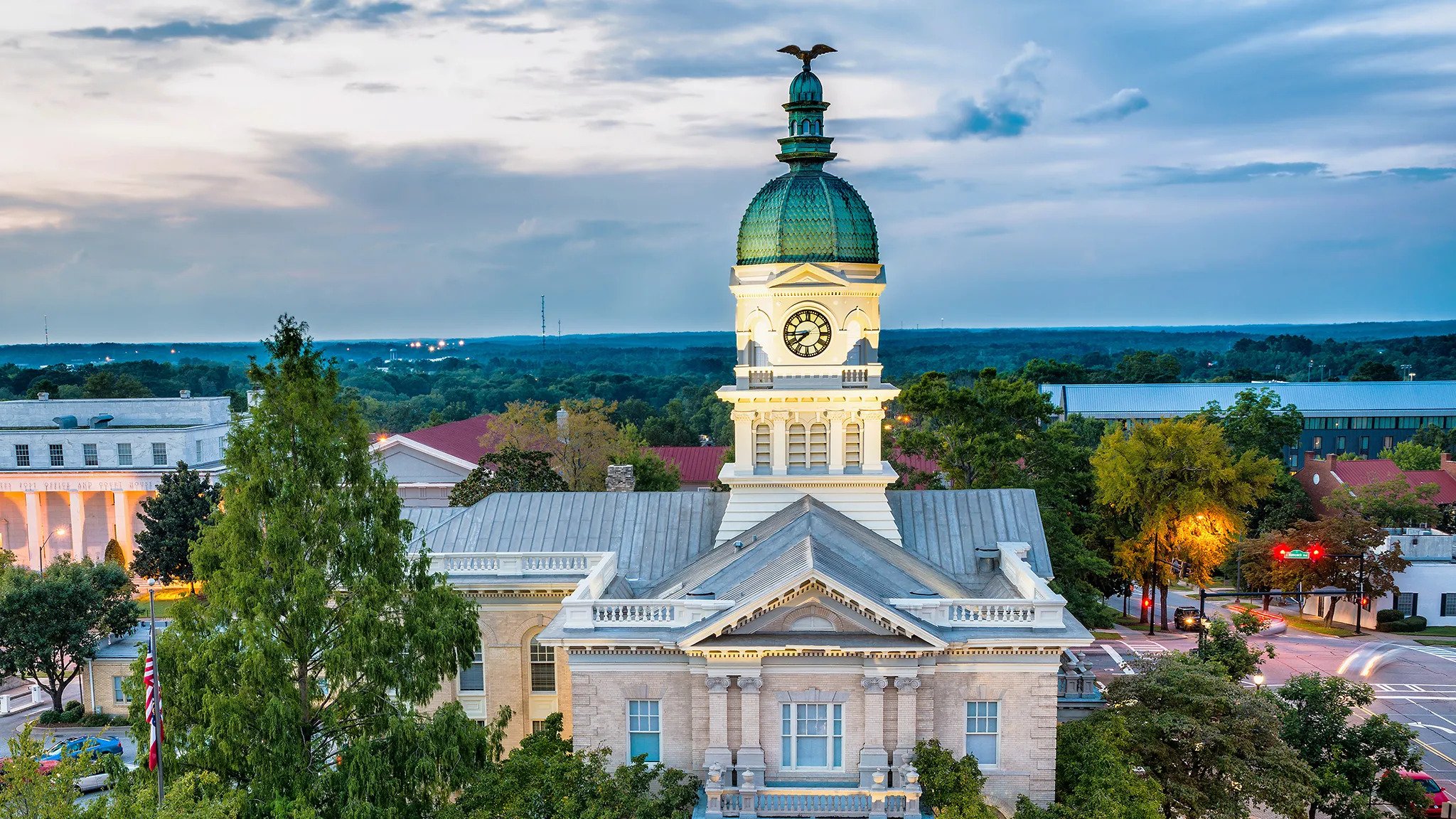
The best colleges in Georgia for 2027 are the Georgia Institute of Technology, Emory University, and the University of Georgia. Choosing the right college can feel daunting, and it is one of the biggest decisions a person makes, so finding the school that fits your goals matters. Georgia’s best colleges range from large public research universities to small private colleges and historically Black institutions.
If you are looking for the best colleges in Georgia, this list ranks 25 schools by program range, research strength, student outcomes, and campus experience. Read the University Magazine rankings methodology and see our university rankings for context.
The Best Colleges In Georgia 2027
1. Georgia Institute of Technology

The Georgia Institute of Technology, or Georgia Tech, is a public research university in Midtown Atlanta. Governor Henry McDaniel signed the bill creating it on October 13, 1885, and it opened in 1888 as the Georgia School of Technology. It enrolled 56,715 students in fall 2025, about 21,000 of them undergraduates, and admitted roughly 12.7 percent of applicants for the Class of 2029.
It has seven colleges, is an R1 research university, and spent $1.11 billion on research in 2021, ranking 20th in the country. Its co-op program is the nation’s largest. U.S. News ranked its undergraduate engineering program third in 2025. In 1961, it became the first Deep South university to desegregate without a court order. The Yellow Jackets play in the Atlantic Coast Conference.
2. Emory University

Emory University is a private research university in Druid Hills, about four miles from downtown Atlanta. Methodists founded it in 1836 as Emory College in Oxford, Georgia, and rechartered it as a university in 1915. About 16,100 students enrolled in fall 2024, and the overall admission rate was 10.6 percent in 2022.
Emory has nine schools, including Goizueta Business School, the School of Medicine, the School of Law, and the Rollins School of Public Health, which U.S. News ranked third. The campus sits next to the Centers for Disease Control and Prevention, on land Emory donated in 1947. Its endowment was $12 billion in 2025, and the Eagles compete in NCAA Division III. U.S. News ranked Emory 24th among national universities for 2024 to 2025.
3. University of Georgia

The University of Georgia (UGA) was chartered on January 27, 1785, in Athens, making it the first state-chartered public university in the country. It is the flagship of the University System of Georgia, and about 43,900 students are enrolled in fall 2025. The acceptance rate is about 29.8 percent, and the six-year graduation rate is around 90 percent.
UGA has 21 schools and colleges, and its School of Medicine is set to enroll its first class in fall 2026. It is an R1 university, and it spent about $654 million on R&D in 2025. U.S. News tied it for 16th among public universities in 2025. Its Honours College ranks as the top honours program in the country, and the Bulldogs play in the SEC.
4. University of West Georgia
The University of West Georgia (UWG) opened in 1906 as the Fourth District Agricultural and Mechanical School in Carrollton. It became West Georgia College in 1933 and took its current name in 2005. About 16,100 students enrolled in fall 2025, and the university also runs a campus in Newnan and a center in Douglasville.
Its colleges include the Richards College of Business, the Tanner Health System School of Nursing, the College of Education, and an Honours College. UWG is one of only two public universities in the country with a psychology program focused on humanistic and transpersonal psychology, and it has offered a psychology Ph.D. since 2011. The Wolves compete in NCAA Division I in the ASUN Conference.
5. Clayton State University
Clayton State University sits on a 192-acre campus in Morrow with wooded grounds and five lakes, about 20 minutes from downtown Atlanta. It started in 1969 as Clayton Junior College, became a four-year school in 1986, and took its current name in 2005. About 6,400 students enrolled in fall 2025.
The university offers 40 baccalaureate majors and nine master’s programs, and its College of Business holds AACSB accreditation. Spivey Hall, the campus concert hall, hosts more than 400 performances a year. Classes also meet at instructional sites in Peachtree City, Jonesboro, and McDonough. The Lakers compete in NCAA Division II in the Peach Belt Conference, and the women’s basketball team won the 2011 national championship.
6. Mercer University

Mercer University opened on January 14, 1833, in Penfield with 39 students and moved to Macon in 1871. It is a private research university with 9,124 students in fall 2023, and it has 12 colleges and schools, among them liberal arts, business, engineering, law, pharmacy, nursing, and music.
Mercer also has campuses in Atlanta, Savannah, and Columbus. Its School of Medicine, founded in 1982, trains primary care physicians for rural and underserved parts of Georgia and admits only Georgia residents. It is classified as an R2 research university, and the Bears compete in NCAA Division I in the Southern Conference. It suits students who want a private school with professional programs in the same place.
7. Augusta University
Augusta University is a public research university and academic medical center in Augusta. Its medical college dates back to the Medical Academy of Georgia in 1828, and the university took its current form in 2013 when Augusta State University and Georgia Health Sciences University merged. About 9,800 students enrolled in fall 2022.
The Health Sciences campus houses the Medical College of Georgia and the Dental College of Georgia. The university also has a College of Nursing and other health-focused schools, and the focus on medicine and allied health defines the student experience. Satellite medical campuses are in Albany, Rome, and Savannah. The Jaguars compete in NCAA Division II, and the men’s golf team won Division I national titles in 2010 and 2011.
8. Spelman College

Spelman College in Atlanta is the oldest private historically Black liberal arts college for women. Harriet Giles and Sophia Packard started it in 1881 in the basement of Friendship Baptist Church, and it became Spelman College in 1924. About 2,400 students enroll, and the acceptance rate for the fall 2022 first-year class was 28 percent.
U.S. News ranked it first among historically Black colleges in 2025 and tied it for first in social mobility. Psychology, biology, and political science are among its most popular majors. Spelman ranks first among institutions that send African American women on to science, engineering, and math doctorates. Alumnae include Alice Walker and Marian Wright Edelman. Agnes Scott College, another private women’s college in the Atlanta area, is in nearby Decatur.
9. Georgia State University

Georgia State University began in 1913 as Georgia Tech’s Evening School of Commerce and became Georgia State in 1969. Its main campus sits in downtown Atlanta. About 53,100 students enrolled in fall 2025, including 45,065 undergraduates.
It has 11 colleges and schools, including the J. Mack Robinson College of Business, the College of Law, and Perimeter College, which joined in a 2016 consolidation. U.S. News ranked Georgia State eighth for social mobility and third for undergraduate teaching, and in 2023 it placed second for most innovative schools. The Panthers compete in the Sun Belt Conference, and the esports team won a national championship in 2019.
10. Valdosta State University
Valdosta State University (VSU) was founded in 1906 and opened in 1913 as South Georgia State Normal College. It became Valdosta State University in 1993. About 10,300 students enrolled in fall 2024 on a roughly 168-acre campus, including the Spanish Mission-style West Hall from 1917.
Six colleges offer 55 undergraduate and 50 graduate programs across science, the humanities, the arts, business, education, and nursing and health sciences. The Blazers have played in the Gulf South Conference in NCAA Division II since 1981. Football won four national championships in 2004, 2007, 2012, and 2018, and men’s tennis won four more, most recently in 2024 and 2025.
11. Kennesaw State University
Kennesaw State University (KSU) was chartered in 1963 and opened in 1966 as Kennesaw Junior College with 1,014 students. Today, it enrolls 51,375 students, making it Georgia’s third-largest university, with two metro Atlanta campuses in Kennesaw and Marietta totalling 581 acres.
KSU has 11 colleges, including the Michael J. Coles College of Business and the College of Computing and Software Engineering. It is classified as an R2 research university. The Owls moved up to NCAA Division I FBS and joined Conference USA for the 2024-2025 season. Its large metro campus and strong business and computing programs are major reasons students choose it.
12. Georgia Southwestern State University
Georgia Southwestern State University (GSW) is a public university in Americus on a 250-acre campus. It opened in 1906 as the Third District Agricultural and Mechanical School and took its current name in 1996. About 3,400 students enrolled in fall 2023, so classes tend to be small.
Four colleges offer its degrees: Arts and Sciences, Business and Computing, Education, and Nursing and Health Sciences. Michelle Johnston has served as president since 2024. The Hurricanes compete in NCAA Division II, mainly in the Peach Belt Conference. It is a good fit for students who want a small public university in a small town.
13. Abraham Baldwin Agricultural College
Abraham Baldwin Agricultural College (ABAC) is a rural college in Tifton that opened in 1908 as the Second District A&M School. It took the Abraham Baldwin name in 1933 when it joined the University System of Georgia. It offers bachelor’s and associate degrees and enrolled 3,815 students in fall 2021.
The School of Agriculture and Natural Resources is its largest academic area, and the Forestry track in Natural Resources Management is accredited by the Society of American Foresters. Nursing is the largest single major, an associate degree that prepares graduates for Registered Nurse certification. An instructional site operates in Bainbridge. The Golden Stallions compete in the NAIA and have won five national titles.
14. Georgia Southern University

Georgia Southern University in Statesboro was founded in 1906 as the First District Agricultural and Mechanical School and became a university in 1990. It has since grown into a multi-campus school with locations in Savannah (the former Armstrong campus), Hinesville, and Swainsboro, where East Georgia State College consolidated into it in January 2026.
The university enrolls about 30,000 students and offers more than 150 majors and programs through twelve colleges. It is classified as an R2 research university. The Eagles compete in NCAA Division I FBS in the Sun Belt Conference, and the football team won six Division I-AA national championships before moving up. The mascot, Freedom, is a live bald eagle. Kyle Marrero has been president since 2019.
15. Thomas University
Thomas University is a small private university in Thomasville, chartered in 1950 as Birdwood Junior College. Classes began in 1954. It offered its first four-year degree in 1988. About 1,000 students enroll, many of them non-traditional adult learners.
It offers associate, bachelor’s, and master’s degrees, and it runs the Move On When Ready program for high schoolers. The Night Hawks compete in the NAIA, joined the Southern States Athletic Conference in 2023 to 2024, and field 15 varsity sports. The softball team won the NAIA national championship in 2004. Small classes and flexible programs draw working students.
16. Columbus State University
Columbus State University opened in 1958 as Columbus College, a junior college in a former hosiery mill. It became a four-year school in 1965 and took its current name in 1996. About 7,600 students enrolled in fall 2023, and the university offers programs in more than 90 disciplines.
Its units include the D. Abbott Turner College of Business and the Schwob School of Music. The 132-acre main campus is in suburban Columbus, and the downtown RiverPark campus hosts the fine and performing arts. U.S. News ranked it 64th among Regional Universities South and 30th among top public schools for 2024. The Cougars play in NCAA Division II.
17. Fort Valley State University
Fort Valley State University is a public land-grant historically Black university in Fort Valley. It was formed in 1939 by combining two older schools, one dating to 1890. Its main campus covers 1,365 acres.
Students choose from more than 50 bachelor’s majors and several master’s programs in the Colleges of Arts and Sciences, Education, and Agriculture. The Cooperative Developmental Energy Program offers a dual-degree path into engineering through partner universities, and extension programs reach 42 Georgia counties. The Wildcats compete in NCAA Division II in the Southern Intercollegiate Athletic Conference, and the Blue Machine marching band is a campus favourite.
18. Berry College

Berry College is a private Christian college in Mount Berry, next to Rome and about an hour northwest of Atlanta. Martha Berry founded it in 1902 as the Boys Industrial School on 83 acres, where students worked in exchange for their education. Its campus has grown to more than 27,000 acres, described as the largest contiguous college campus in the world.
About 2,500 students enrolled in fall 2024, with an 11-to-1 student-faculty ratio. LifeWorks guarantees a campus job to every student who wants one, continuing the college’s tradition of service. U.S. News ranked Berry fourth among Regional Universities South and first for best value in its 2021 edition. The Vikings compete in NCAA Division III, and the campus has appeared in films like Remember the Titans.
19. Georgia College & State University

Georgia College & State University in Milledgeville was chartered in 1889 as Georgia Normal and Industrial College. In 1996, the Board of Regents set its mission as Georgia’s Public Liberal Arts University. It enrolls about 7,000 students, and fall 2024 entering students averaged a 3.70 GPA and a 1193 SAT score.
U.S. News ranked it 15th among Regional Universities South in 2025, and tied it for sixth among top public schools, fifth for undergraduate teaching, and fourth for most innovative schools. The university has four colleges, and author Flannery O’Connor is an alumna. The Bobcats compete in NCAA Division II in the Peach Belt Conference. It offers a small-college feel at public-university prices.
20. University of North Georgia
The University of North Georgia (UNG) started in 1873 as North Georgia Agricultural College in Dahlonega. It took its current form in 2013, when North Georgia College & State University merged with Gainesville State College. It has campuses in Dahlonega, Oakwood, Watkinsville, Cumming, and Blue Ridge, and nearly 20,000 students.
UNG is one of six senior military colleges in the country and is designated “The Military College of Georgia,” with more than 600 ROTC students in a typical year. Price Memorial Hall in Dahlonega is the oldest surviving building. The Nighthawks compete in NCAA Division II, mainly in the Peach Belt Conference, with 13 varsity sports and no football team.
21. Savannah State University
Savannah State University is Georgia’s oldest public historically Black university. The state created it on November 26, 1890, as the Georgia State Industrial College for Coloured Youth, and it moved to Savannah in 1891 under its first president, Richard R. Wright Sr. It adopted its current name in 1996 and enrolls about 2,900 students.
Four colleges, Business Administration, Liberal Arts and Social Sciences, Sciences and Technology, and Education, offer 23 undergraduate and five master’s programs. Business holds AACSB accreditation, journalism and mass communications holds ACEJMC accreditation, and social work is accredited by the Council on Social Work Education. The Tigers compete in NCAA Division II in the Southern Intercollegiate Athletic Conference.
22. Life University
Life University is a private university in Marietta, founded in 1974 as Life Chiropractic College by chiropractor Sid Williams. It took its current name in 1996. About 2,700 students enroll, and its doctor of chiropractic program is its best-known offering. Students come from across the country and abroad.
The Southern Association of Colleges and Schools Commission on Colleges accredits it for associate through doctoral degrees, and the Council on Chiropractic Education accredits its chiropractic program. The Running Eagles compete in the NAIA in the Southern States Athletic Conference with 20 varsity teams, and the rugby sevens team won the 2011 USA Rugby collegiate national championship.
23. Morehouse College
Morehouse College is a private historically Black men’s liberal arts college in Atlanta. Founded in 1867 as the Augusta Institute, it moved to Atlanta in 1879 and took the Morehouse name in 1913. It sits on a 61-acre urban campus, enrolls about 2,260 students, and is part of the Atlanta University Center consortium.
Morehouse offers more than 30 majors and has produced six Rhodes Scholars. Its alumni include Martin Luther King Jr., Spike Lee, and Samuel L. Jackson, and the campus is a short ride from downtown Atlanta. U.S. News ranked it fifth among historically Black colleges in its 2023 edition.
24. Dalton State College
Dalton State College in northwest Georgia started in 1963 as Dalton Junior College and opened in 1967. It became Dalton State College in 1998 when it added four-year degrees. About 5,000 students attend; the average age is 24, and in fall 2023, about 37 percent of undergraduates were Hispanic.
The college offers bachelor’s degrees in accounting, biology, criminal justice, psychology, and social work, along with 22 associate degrees and several certificates. A second campus in Ellijah brings classes closer to students in the North Georgia mountains. The Roadrunners compete in the NAIA, and the men’s basketball team won the 2015 national championship.
25. Albany State University
Albany State University is a public, historically Black university in Albany and is often described as Georgia’s largest historically Black institution. Joseph Winthrop Holley founded it in 1903 as the Albany Bible and Manual Training Institute. It gained university status in 1996, and 6,809 students enrolled in fall 2024.
Nursing and other health professions, criminal justice, biology, and psychology are popular majors, and the university includes the Darton College of Health Professions. The university offers an engineering dual-degree partnership with Georgia Tech. The Golden Rams compete in NCAA Division II in the SIAC, and the football team has 17 conference championships. The campus covers 231 acres.
Frequently Asked Questions
What are the best colleges in Georgia in 2027?
Georgia Tech, Emory University, the University of Georgia, the University of West Georgia, and Clayton State University lead this University Magazine list for 2027.
Which Georgia universities have the most students?
Georgia Tech reported 56,715 students in fall 2025, Georgia State University had 53,144, and Kennesaw State University had 51,375.
Which Georgia colleges are historically Black?
Spelman College, Morehouse College, Albany State University, Fort Valley State University, and Savannah State University are historically Black institutions on this list.
Does Georgia have a senior military college?
Yes. The University of North Georgia in Dahlonega is one of six senior military colleges in the country and is designated The Military College of Georgia.
Which Georgia colleges are the most selective?
Emory admitted 10.6 percent of applicants in 2022, Georgia Tech admitted about 12.7 percent for the Class of 2029, and Spelman admitted 28 percent for the fall 2022 first-year class.
Top 25 Best Colleges in Georgia 2027: Ranked List
- Georgia Institute of Technology
- Emory University
- University of Georgia
- University of West Georgia
- Clayton State University
- Mercer University
- Augusta University
- Spelman College
- Georgia State University
- Valdosta State University
- Kennesaw State University
- Georgia Southwestern State University
- Abraham Baldwin Agricultural College
- Georgia Southern University
- Thomas University
- Columbus State University
- Fort Valley State University
- Berry College
- Georgia College & State University
- University of North Georgia
- Savannah State University
- Life University
- Morehouse College
- Dalton State College
- Albany State University
Read more about UM World University Rankings



 University Magazine is part of the

