





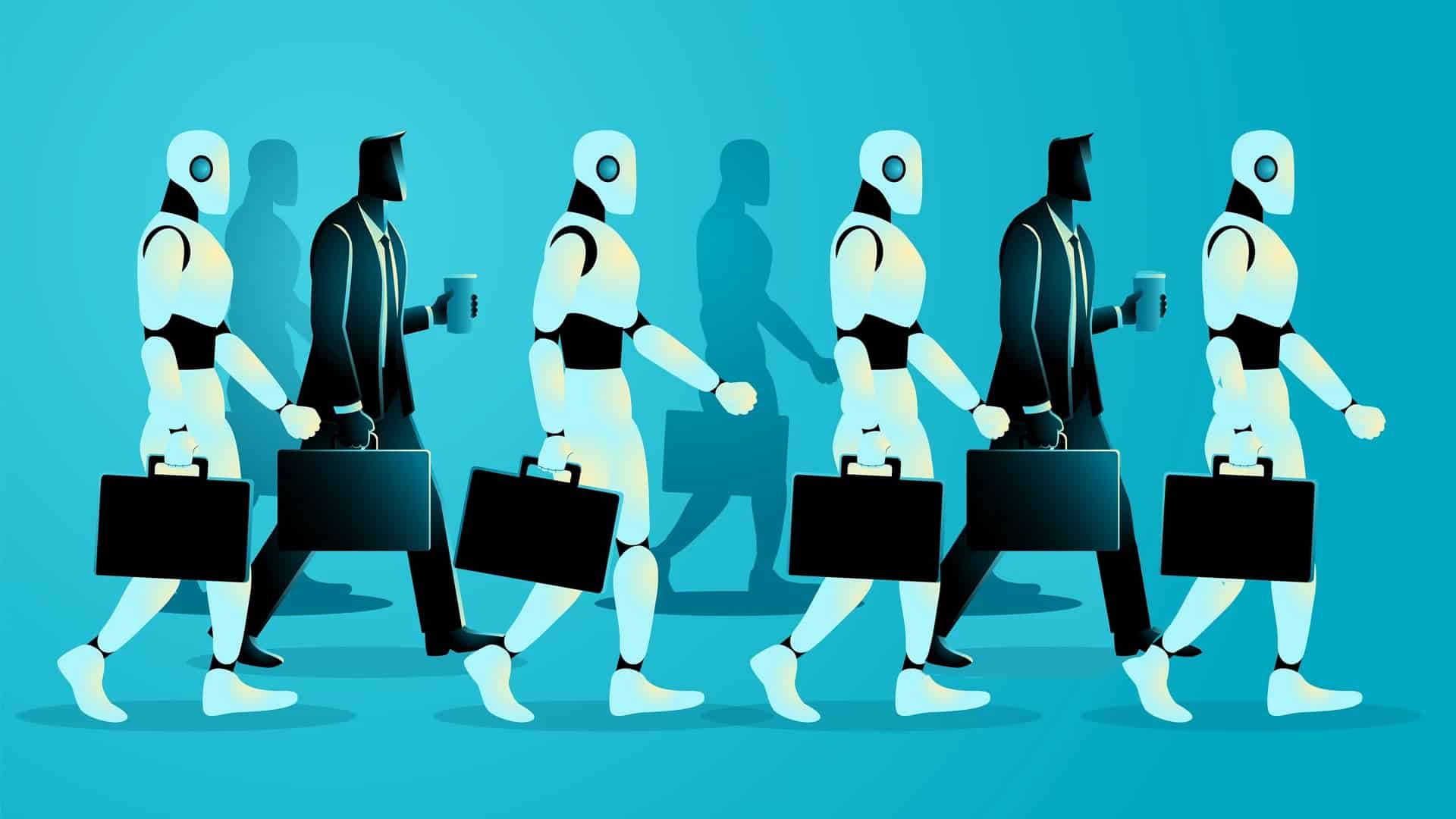
Artificial intelligence is rapidly reshaping the global workforce. By 2026, automation and machine learning will replace or significantly reduce the demand for many routine, data-driven roles.
These changes are driven by cost efficiency, speed, and accuracy. Below are fifteen jobs most at risk, explained clearly with practical context to help you understand why these roles are vulnerable and how work itself is evolving in the AI era.
Which Jobs AI Will Take Away From You in 2026
1. Data Entry Clerks
Data entry roles are highly vulnerable because AI systems can process, sort, and input massive volumes of information faster and with fewer errors. Optical character recognition, automation software, and machine learning tools already handle invoices, forms, and records without human input. By 2026, most organizations will rely on automated pipelines, reducing the need for manual data-entry roles across healthcare, finance, government, and corporate operations.
2. Telemarketers
AI-powered voice assistants and predictive dialling systems are replacing human telemarketers at scale. These tools can make thousands of calls simultaneously, personalize scripts using customer data, and respond naturally to objections. Businesses favour automation to reduce costs and achieve consistent performance. By 2026, outbound sales and survey calls will rely heavily on AI, leaving limited space for traditional telemarketing roles.
3. Customer Support Agents
AI chatbots and virtual assistants increasingly handle basic customer support. These systems resolve common issues, process refunds, reset passwords, and answer FAQs around the clock. Natural language processing continues to improve customer satisfaction without human involvement. By 2026, human agents will focus on complex cases, while entry-level support jobs will decline significantly across retail, banking, and technology sectors.
4. Bookkeepers
Automated accounting software now categorizes expenses, reconciles transactions, and generates financial reports in real time. AI reduces errors while improving compliance and speed. Small businesses, in particular, prefer automated tools to manual bookkeeping services. By 2026, demand for traditional bookkeepers will shrink, with growth shifting toward financial analysts and advisory roles that require judgment and strategic insight rather than routine recordkeeping.
5. Proofreaders
AI writing tools can now detect grammar issues, spelling errors, tone inconsistencies, and clarity problems instantly. Many platforms offer real-time editing suggestions that rival human proofreading. While creative editing still needs people, basic proofreading tasks are rapidly automated. By 2026, demand for standalone proofreading roles will decline, especially in digital publishing, marketing content, and internal corporate communications.
6. Cashiers
Self-checkout systems and AI-powered payment kiosks are expanding rapidly across grocery stores, retail chains, and fast-food outlets. These systems reduce labour costs and speed up transactions. Computer vision even enables checkout-free shopping experiences. By 2026, cashier roles will continue to decline, with remaining positions focused on customer assistance rather than transaction processing.
7. Travel Agents
AI-driven booking platforms can plan trips, compare prices, suggest itineraries, and handle changes instantly. These tools analyze preferences and budgets more efficiently than traditional agents. While luxury travel advisors may remain, most standard travel planning is automated. By 2026, general travel agent roles will decrease as consumers rely on intelligent platforms for flights, hotels, and experiences.
8. Warehouse Pickers
Robotics- and AI-powered logistics systems are transforming warehouses. Automated picking, sorting, and packing machines work continuously with high accuracy. Companies adopt these systems to meet fast delivery expectations. By 2026, many warehouse picker roles will be reduced or redefined, with human workers shifting toward maintenance, supervision, and logistics coordination rather than manual handling.
9. Receptionists
AI-powered virtual receptionists. I can schedule appointments, answer calls, route messages, and greet visitorsviah kiosks or voice systems. These tools operate continuously without breaks. Many offices already rely on automated front desk solutions. By 2026, traditional receptionist roles will decline, particularly in medical offices, corporate buildings, and service-based businesses.
10. Market Research Analysts
AI can analyze consumer behaviour, social media trends, and purchasing patterns in real time. Advanced analytics tools generate insights faster than manual research methods. While strategic interpretation still matters, data collection and analysis tasks are automated. By 2026, entry-level market research roles will shrink as companies rely on AI dashboards and predictive modelling for decision-making.
11. Translators
Machine translation tools now deliver fast, accurate translations across dozens of languages. Neural networks continue to improve tone and context handling. While human translators remain essential for legal and creative work, routine translation tasks are automated. By 2026, demand for basic translation services will decline sharply, especially for customer support, documentation, and internal communications.
12. Paralegals
AI legal tools can review contracts, search case law, and quickly summarize legal documents. These systems reduce time spent on repetitive research tasks. Law firms use AI to lower costs and improve efficiency. By 2026, paralegal roles focused on document review and research will decrease, while positions requiring legal judgment and client interaction remain more secure.
13. Content Moderators
AI systems now detect harmful content, spam, and policy violations across platforms at a massive scale. Image recognition and language models flag issues instantly. Human moderators still handle edge cases, but automation dominates. By 2026, many content moderation roles will be reduced as platforms rely on AI to efficiently manage safety, compliance, and user experience.
14. Insurance Underwriters
AI-driven risk assessment tools analyze data points such as behaviour, history, and market trends in real time. These systems’ pricing policies and fraud detection are more accurate than manual methods. Insurers adopt AI to improve speed and profitability. By 2026, traditional underwriting roles will decline, shifting demand toward oversight, compliance, and complex risk evaluation tasks.
15. Junior Graphic Designers
AI design tools can generate logos, layouts, ads, and social media visuals in minutes. Templates powered by machine learning reduce the need for entry-level designers. While senior creative roles remain valuable, basic design tasks are automated. By 2026, junior graphic design roles will decline as businesses rely on AI platforms for faster, more cost-effective visual content creation.





 University Magazine is part of the

